Textile and Apparel SEA Vietnam Summit 2026
Apr. 22-23, | HANOI, VIETNAM | IN-PERSON EVENT
Apr. 22-23, | HANOI, VIETNAM | IN-PERSON EVENT
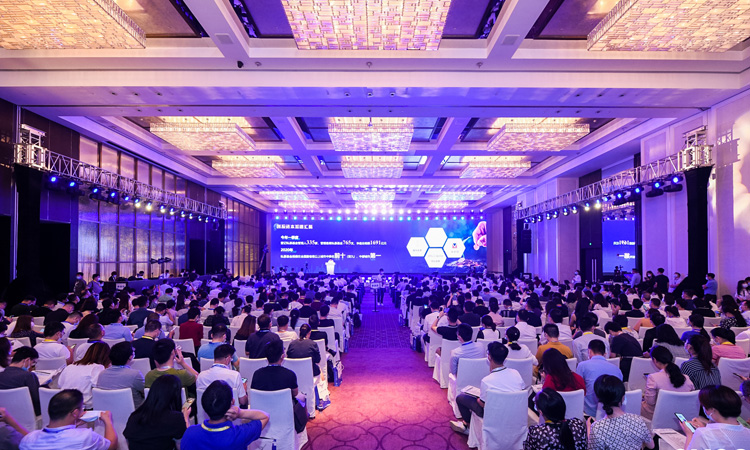


More and more international textile and apparel companies are pursuing green production, which is posing a great challenge to Vietnam's textile industry. Digital transformation is essential for improving businesses' competitiveness, allowing them to meet customers' demands related to quality and transparency. Digital transformation plays an important role in improving the competitiveness of textile and apparel businesses. Ongoing digital transformation key to Vietnam textile-garment competitiveness.

The EVFTA and CPTPP Agreements actively support Vietnam's textile and garment export activities. Vietnam's textile and garment market in the US, EU and US is still expanding. The trend of shifting the world's textile and garment supply out of China and Vietnam is one of the destinations for importers and retailers. Covid also changed some trends. That is driving demand for sports products. It also drives digitalisation across the industry with nearly 40% of all sales currently generated from digital channels.

In the strategic evolution of Vietnam's textile and garment sector, "greening" the production process has emerged as a critical priority for enterprises aiming to retain international customers and expand into new markets. Concurrently, there is a growing ambition among businesses to shift from contract manufacturing for foreign brands toward exporting products under their own brand names. Supported by a network of Free Trade Agreements (FTAs), Vietnamese textile and garment companies now enjoy enhanced competitive access to key global markets, creating substantial export potential for the industry. However, this opportunity is accompanied by increasingly stringent demands for product quality, corporate social responsibility, and—notably—environmental sustainability. To remain competitive, enterprises must adopt clean, green, and sustainable technologies across their production systems.

There remains little doubt that changing consumer behaviour enabled by technology and online retailing is driving massive change throughout the entire fashion supply chain. To date, brands and manufacturers have responded with varying degrees of urgency to address ongoing supply chain challenges around speed, cost, customisation, order complexity, innovation and transparency. Current strategies have included the pursuit of lower cost manufacturing regions (now with far fewer options); vertical integration or Joint Venture activity (JV) – a partnership between two separate companies offering different capabilities; and Vendor Managed Inventory (VMI) programmes – where brands or retailers manage their stock and automatically replenish based on sales. These strategies will certainly help – but digitisation is increasingly being acknowledged as a vital ingredient.

Digital fashion – from tailoring your avatar to virtual red carpets – can satisfy the desire for consumption, but in a more sustainable way. As people spend more time online – in meetings, social media and video games – clothing brands and designers are increasingly interweaving digital design with physical fashion. Digital technologies like 3D pattern making and rendering can alleviate the cost, work, time and waste involved in traditional fashion sampling. The efficiencies in these new digital processes offer sustainability benefits in the form of lower greenhouse emissions, waste and transport miles involved in sending new season clothing sample sets around the world.

Within the textile printing industry, demand for digital textiles is rapidly expanding. Furthermore, printing mills are transitioning from a traditional to an automated business model. Every year, approximately 20 billion linear meters of printed textile fabric is produced. Currently, only around 5% of these are produced using the automation method. However, the digital textile printing industry is growing at the rate of around 25% every year. Another driver spurring market growth is the consistent use of digital textile printings inks in industries such as fashion, home textiles, and soft signage. Increase in consumer demand for printed textiles for multifarious application, along with a rise of the fashion industry, are expected to substantially increase the market for digital textile printings inks over the coming years. Growing inclination of purchasing clothes from e-commerce platforms along with buying related accessories in developing economies is bolstering the demand for textiles in countries like India, Vietnam and Bangladesh.
Main Conference
Sub-Streams
Buffet Lunch
Documentation Package
Main Conference
To know more Brands
3 One to One Meetings
Known by 400+ Delegates
Reported by all Media Partners
Main Conference
Standard Exhibition Booth
3 One to One Meetings
Sub-Streams
Documentation Package